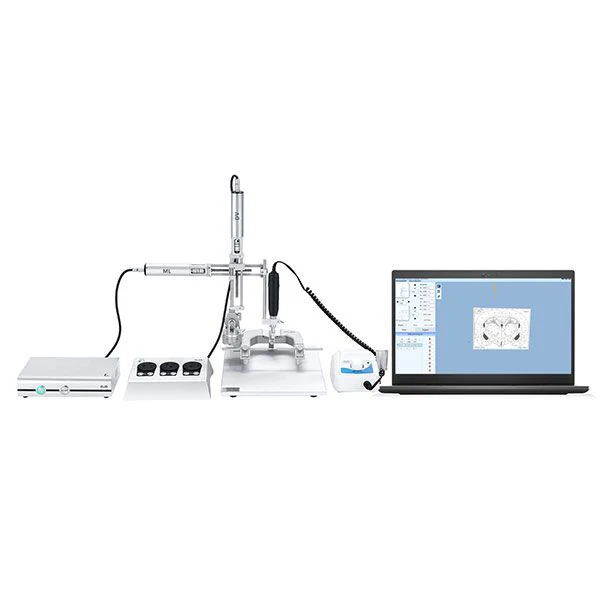
High-precision brain research relies heavily on instruments capable of micrometer-level accuracy. Digital stereotaxic instruments are increasingly preferred in laboratories for their ability to perform precise surgical and experimental procedures. Tolerance ranges, or acceptable deviations in positioning, play a crucial role in ensuring the success of experiments, especially in delicate animal models. BP LabLine provides equipment that exemplifies this precision while maintaining ease of operation.
Precision and Accuracy in Automated Stereotaxic Instruments
Automated stereotaxic instruments offer a level of precision that manual devices cannot match. Modern systems like the RS-SI Automated Stereotaxic Instrument achieve positioning accuracy up to 1 μm, significantly minimizing errors. Maintaining proper tolerance ranges ensures that probes reach the target brain regions consistently, which is critical for reproducible research results. These tolerances determine whether experiments yield valid and reliable outcomes across multiple trials.
Features That Enhance Safety and Efficiency
Safety features in digital stereotaxic instruments improve both animal welfare and research efficiency. Anti-collision protection prevents unintended movements that could damage tissue, while automated procedures streamline tasks such as tissue removal and injection. Integrated software with rat and mouse brain atlases allows precise mapping of target areas, ensuring high-accuracy placement without the risk of operator error.
Selecting Instruments Within Tolerance Ranges
Choosing instruments with well-defined tolerance ranges is essential for accurate experimental outcomes. Different animal models may require different positioning precision, and understanding these requirements ensures proper selection. BP LabLine instruments are designed to maintain consistent tolerances, reducing variability in research and enhancing overall reliability. Proper selection of equipment supports scientific reproducibility and minimizes potential experimental errors.
Conclusion
Maintaining strict tolerance ranges is vital for successful neuroscience research. Automated stereotaxic instruments not only improve precision but also enhance operational safety and efficiency. High-quality digital stereotaxic instruments like those offered by BP LabLine enable reliable, reproducible results, advancing both basic and applied research.