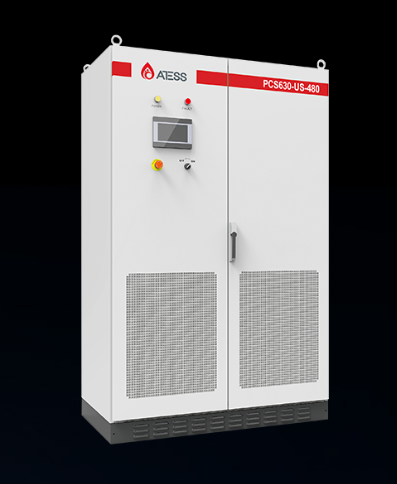
For any industrial battery inverter intended for global deployment, third-party certifications are not optional. A Power Conversion System (PCS) must carry region-specific marks to gain regulatory clearance and customer trust. These certifications validate safety, electromagnetic compatibility, and grid interconnection performance. Without proper credentials, a battery inverter cannot enter key markets such as Europe, North America, or Australia.
North American Compliance and Utility Readiness
For the U.S. and Canadian markets, a Power Conversion System (PCS) requires rigorous testing under standards such as UL 1741 and CSA C22.2. Atess secured CSA certification for its HPS50-US, HPS100-US, and HPS150-US hybrid inverters, demonstrating compliance with North American electrical safety requirements. These battery inverter models operate at altitudes up to 6,000 meters and across ambient temperatures from -25°C to 55°C. For a Power Conversion System (PCS) , CSA certification signals readiness for commercial solar plants up to 150 kW in size, covering everything from electrical insulation to thermal performance.
European and Australian Market Standards
A battery inverter destined for European projects must meet the CE framework. The relevant harmonized standards include EN 62477-1 for safety of power electronic converter systems, and EN 50549 for grid interconnection requirements. Australia demands Clean Energy Council (CEC) and SAA certification, which ATESS products have already obtained. A Power Conversion System (PCS) entering the Australian market must pass these assessments to be listed for grid connection. For a battery inverter , meeting the CEC standard involves testing for anti-islanding protection, power quality, and fault response.
Comprehensive Testing and Underlying Standards
Beyond regional marks, a Power Conversion System (PCS) typically undergoes testing to IEC 62109-1 and IEC 62109-2, which cover general and special safety requirements for power converters in photovoltaic systems. IEC 61000 series testing addresses electromagnetic compatibility, ensuring the battery inverter does not interfere with nearby equipment. For a Power Conversion System (PCS) , passing these tests provides documented evidence that the unit meets international safety baselines, facilitating smoother market entry across multiple jurisdictions.
The battery inverter sector relies heavily on recognized certifications to prove reliability and compliance. A Power Conversion System (PCS) that carries CSA, CE, CEC, or UL marks has undergone the necessary evaluations for safety and grid performance. Atess, as a reliable manufacturer in this field, pursues these credentials across its battery inverter portfolio, enabling their systems to serve commercial and industrial customers on a global scale.