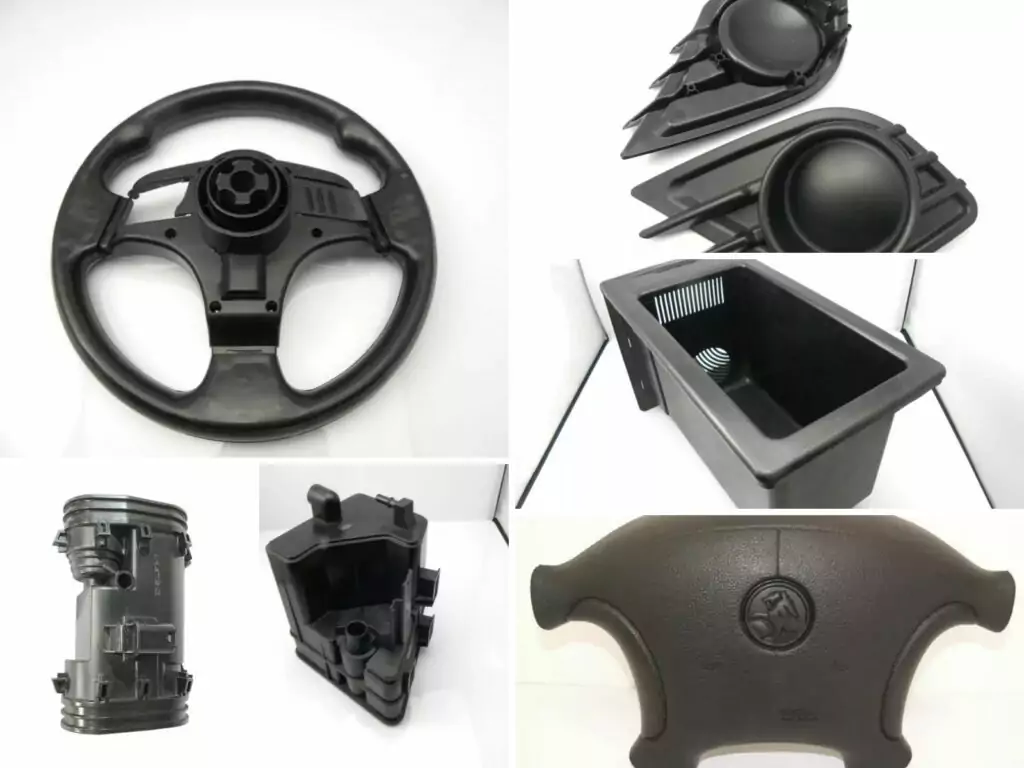
The automotive industry is undergoing rapid transformation, driven by electrification, lightweight design, and increasing demands for sustainability. This article is intended for engineers and industry professionals seeking to understand how these changes are shaping automotive injection molding and influencing the strategies of automotive plastic parts manufacturers. Recognizing these trends is essential for maintaining competitiveness and improving production efficiency.
Lightweight Materials and Design Innovation
One of the most significant trends in automotive injection molding is the shift toward lightweight materials. Reducing vehicle weight improves energy efficiency and overall performance, especially in electric vehicles. Automotive plastic parts manufacturers are increasingly using advanced polymers and composite materials to replace traditional metal components.
These materials offer advantages such as corrosion resistance, design flexibility, and reduced production costs. Automotive injection molding enables the creation of complex shapes that would be difficult to achieve with conventional manufacturing methods. As a result, manufacturers can integrate multiple functions into a single component, simplifying assembly and improving efficiency.
In addition, design innovation is being driven by digital tools. Simulation and CAE analysis allow engineers to optimize part geometry and predict material behavior, enhancing the reliability of automotive injection molding processes.
Smart Manufacturing and Sustainability
Automation and data-driven production are becoming standard in automotive plastic parts manufacturers operations. Smart manufacturing systems monitor process parameters in real time, ensuring consistent quality and reducing variability. These technologies improve the efficiency of automotive injection molding by minimizing defects and optimizing cycle times.
Sustainability is another key trend. Manufacturers are adopting recyclable materials and energy-efficient processes to reduce environmental impact. Automotive injection molding supports these efforts by enabling precise material usage and reducing waste. In addition, closed-loop recycling systems are being integrated into production workflows.
Livepoint Tooling has aligned with these trends by incorporating advanced engineering and automated production systems into their operations. Their approach supports consistent quality while addressing the evolving requirements of modern automotive manufacturing.
Adapting to Industry Transformation
The future of automotive manufacturing depends on the ability to adapt to changing technologies and market demands. Automotive injection molding will continue to play a central role by providing flexible and efficient production solutions. At the same time, automotive plastic parts manufacturers must invest in innovation to remain competitive.
For companies navigating this transition, understanding these trends is essential. By adopting advanced materials, embracing smart manufacturing, and collaborating with experienced partners such as Livepoint Tooling, manufacturers can position themselves for long-term success in a rapidly evolving industry. For trends in Automotive Plastic Parts Manufacturing, tooling decisions should connect part performance with lightweight design, heat resistance, surface quality, assembly accuracy, and repeatable high-volume production requirements. For trends in Automotive Plastic Parts Manufacturing, engineers need to review material behavior, gate location, cooling layout, and dimensional control together, because a single weakness can affect durability, appearance, or installation fit. Livepoint Tooling can help identify warpage, sink marks, and tolerance risks before regular automotive production begins in trends in Automotive Plastic Parts Manufacturing. Engineers working on trends in Automotive Plastic Parts Manufacturing need to review material behavior, gate location, cooling layout, and dimensional control together, because a single weakness can affect durability or installation fit. Livepoint Tooling can help identify warpage, sink marks, and tolerance risks in trends in Automotive Plastic Parts Manufacturing before regular automotive production begins.