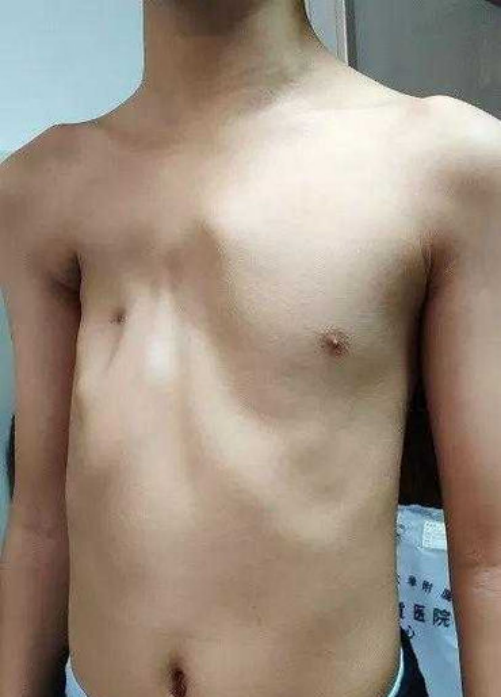
Poland syndrome is a rare congenital condition characterized primarily by abnormalities of the chest wall bony and soft tissue structures, combined with ipsilateral upper limb anomalies. These typically include underdeveloped or absent ribs, pectoralis major, pectoralis minor, and breasts, as well as syndactyly, brachydactyly on the same side of the upper limb, and even scoliosis. Because the severity varies significantly from person to person, treatment plans must be highly individualized.
Understanding Clinical Manifestations
Patients with Poland syndrome may present with a variety of different symptoms. When the chest wall is significantly sunken, it can compress the organs inside the chest cavity, leading to symptoms such as chest tightness, shortness of breath, or rapid heartbeat, especially during physical activity. Changes in chest appearance can also affect a patient’s mental health; some patients—especially post-pubescent females—may experience low self-esteem due to noticeable chest asymmetry. In addition, Poland syndrome may also lead to complications such as scoliosis, ventricular septal defect, and renal hypoplasia.
Options for Aesthetic Reconstruction
At ICWS, the Poland syndrome surgery depends on the tissues and structures involved in the lesion. Patients with depression deformities may undergo the Wang procedure or the Wenlin procedure, while those with structural bone defects are treated with chest wall reconstruction using autologous bone or materials such as MatrixRIB. For soft tissue deficiencies, ICWS provides soft tissue reconstruction, including muscle transplantation or autologous fat grafting, to restore chest contour and symmetry.
Expertise in Chest Wall Repair
For patients requiring complex reconstruction of both the soft tissue and the underlying skeletal framework, The Institute of Chest Wall Surgery (ICWS) offers specialized surgical care. The medical team conducts a comprehensive evaluation to determine the best approach for restoring chest wall integrity. The institute utilizes established reconstructive methods aimed at improving both the physical appearance and psychological well-being of patients affected by the congenital deformity.