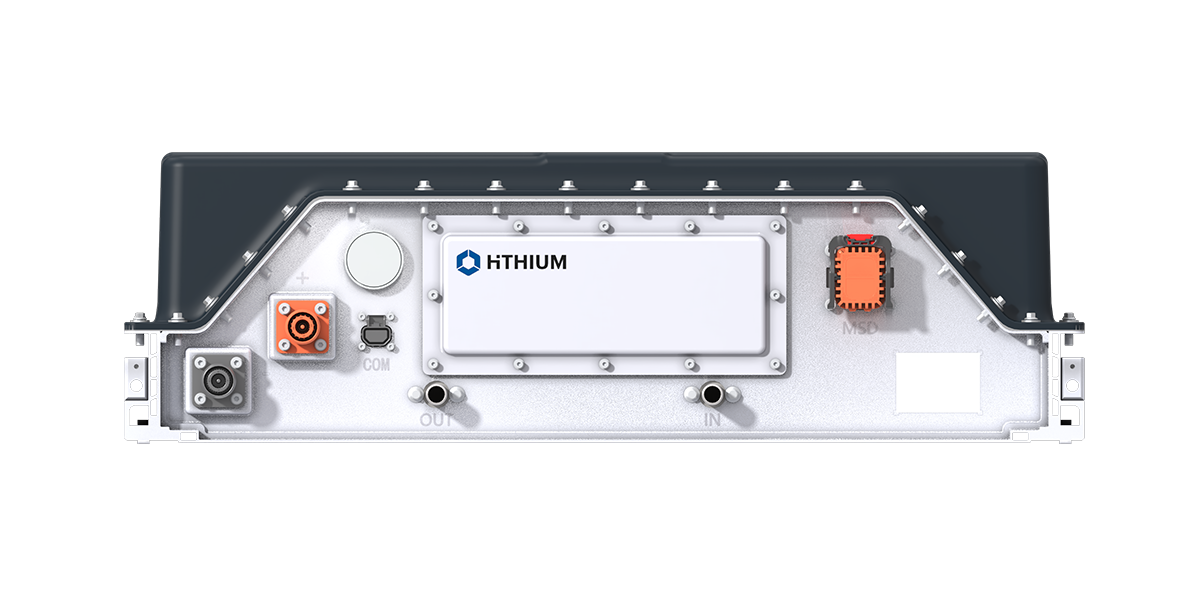
As energy storage systems become increasingly integral to modern power infrastructure, flexibility and efficiency have emerged as key performance indicators. System designers and operators are seeking solutions that can adapt to varying load profiles, deployment environments, and expansion requirements. In this context, the ESS battery module and standardized energy storage module design are central to enabling adaptable, efficient energy storage architectures. Companies such as HiTHIUM are advancing modular solutions to meet the evolving demands of large-scale and distributed energy applications.
Modular Design Enhancing System Flexibility
The adoption of an energy storage module architecture allows systems to be configured with high flexibility. Each ESS battery module functions as a standardized building block that can be combined to meet specific capacity and power requirements. This modular approach enables incremental scaling, allowing systems to expand in response to changing energy demands without requiring extensive redesign.
For example, a 104 kWh-class energy storage module with dimensions of approximately 800 × 2,184 × 243 mm can be efficiently integrated into a variety of system layouts. Such modules are designed for operation at altitudes up to 4,000 meters, making them suitable for deployment across diverse geographic conditions. This adaptability is particularly valuable for projects involving renewable energy integration, where site conditions and energy profiles can vary significantly.
HiTHIUM incorporates modular design principles into its ESS battery module solutions, ensuring compatibility across different system configurations while maintaining consistent performance characteristics. This enables developers and operators to deploy energy storage systems with greater confidence in their scalability and adaptability.
Efficiency Gains Through Standardization and Integration
In addition to flexibility, energy storage module design contributes significantly to system efficiency. Standardized ESS battery module units simplify electrical and mechanical integration, reducing the complexity of system assembly and minimizing potential points of failure. This streamlined design approach enhances overall system reliability and reduces installation time.
Efficiency is further supported by compliance with international safety and performance standards, including IEC 62619 (cell level), UL 1973, UL 9540A, and UN 38.3. These certifications ensure that each energy storage module operates reliably under a range of conditions, contributing to consistent system performance over time.
Moreover, modular systems enable optimized energy management by allowing precise control over individual units. This facilitates better load balancing and reduces energy losses during operation. HiTHIUM leverages these advantages in its ESS battery module designs, integrating high-performance components with standardized architectures to improve both operational efficiency and lifecycle stability.
Enabling Adaptive and Efficient Energy Storage Systems
Integrating energy storage module solutions alongside contemporary power grids helps elevate system flexibility and operational efficiency in tandem. Built upon modular construction principles, universal integration specifications and stringent qualification accreditation, ESS battery module layouts lay down a feasible framework to deliver expandable, dependable energy storage capabilities.
Case in point with HiTHIUM’s industrial practices, such technical breakthroughs empower energy installations to dynamically adjust amid shifting operational demands without compromising steady output metrics. Modular-based energy storage therefore emerges as an indispensable pillar for constructing high-efficiency, resilient power facilities, further fuelling the worldwide transition toward next-generation energy architecture.